
Call Now · (480) 717-9018
Serving Gilbert, Mesa & Chandler  |  ★ 4.9 Google Rating · 135 Reviews  |  (480) 717-9018
Home > Blog > Pool Leak Detection Guide
Pool Leak Detection Guide

A Seasonal Guide to Pool Leak Detection in Mesa AZ

Changelog: Updated for high-heat summer evaporation rates, bucket test steps, acoustic line diagnostics, and skimmer separation repairs in Mesa, AZ.
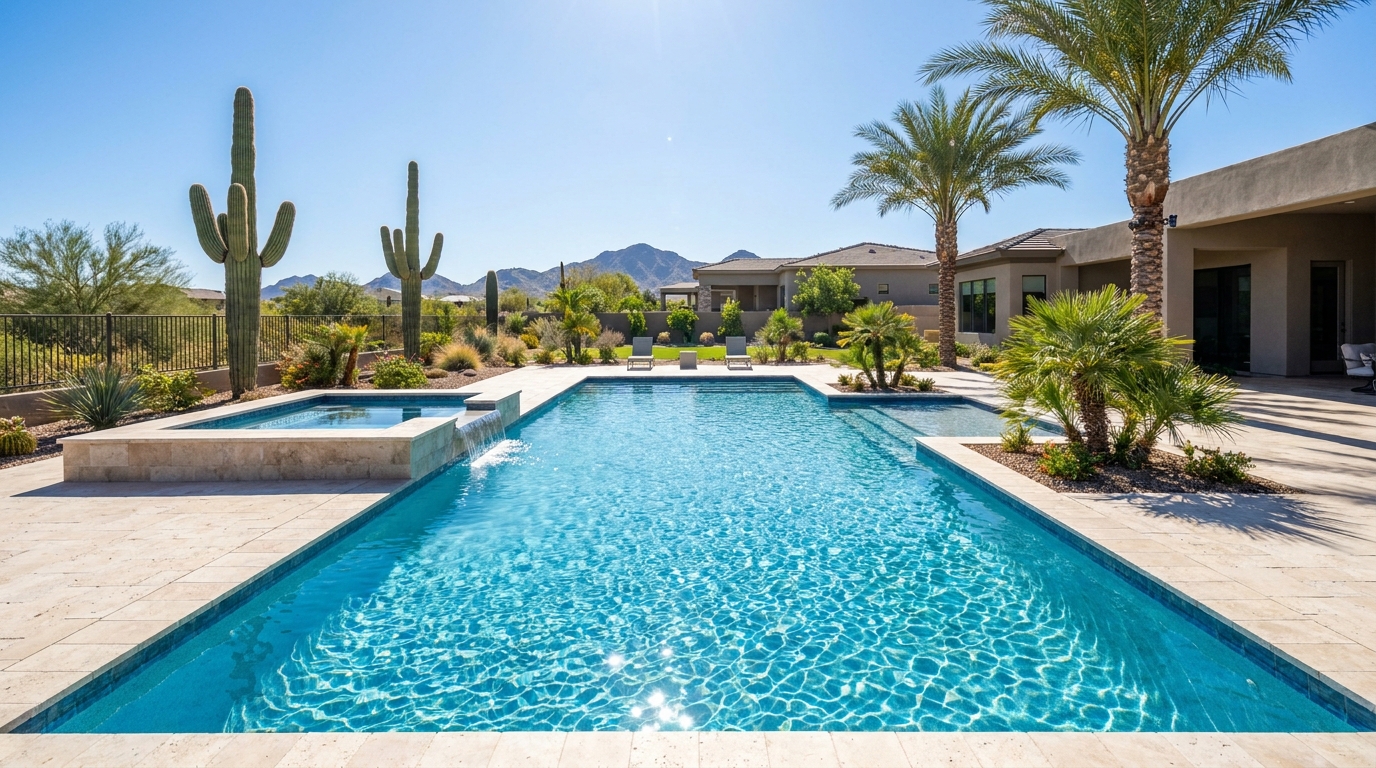
Mesa AZ backyard pool undergoing professional acoustic leak detection and water level inspection
Distinguishing natural desert evaporation from structural or plumbing leaks in Mesa, AZ requires precise seasonal testing and specialized diagnostic tools.
Quick Answer

In Mesa, AZ, swimming pools lose up to 1/2 inch of water daily to summer evaporation, but losses exceeding 1/4 inch in winter signal an active leak. Perform a 24-hour bucket test to confirm water loss, then inspect common leakage points: skimmer throats, return line fittings, pump shaft seals, or underground PVC pressure lines. Professional acoustic and pressure testing pins down exact leak locations without unneeded deck excavation.

Seasonal Pool Leak Detection Guide for Mesa, AZ

In Mesa, AZ, distinguishing between natural evaporative water loss and structural pool leaks requires understanding local climate conditions. While desert heat and low humidity naturally claim water during hot months, hidden leaks waste thousands of gallons, drive up utility bills, and risk washing away sub-base soil beneath decking.

Seasonal temperature swings cause soil expansion and thermal stress on buried PVC lines, skimmer collars, and underwater light niches. Using a seasonal leak detection framework allows homeowners to catch problems early before expensive soil subsidence occurs.

Season Evaporation Baseline Primary Vulnerability Field Diagnostic Steps in Mesa, AZ
Spring March – May Baseline Phase 1/8" – 1/4" per day Equipment pad seals & valves Inspect pump shaft seals, filter belly bands, and heater connections for persistent moisture as pump runtimes increase for the warming swim season.
Summer Peak June – August Peak Evaporation 3/8" – 1/2" per day Skimmer throat & light niche seals Extreme summer temperatures cause thermal expansion. Perform a 24-hour bucket test to confirm whether water loss exceeds normal sun evaporation.
Monsoon July – Sept Soil Movement Varies with storm rainfall Buried PVC plumbing lines Heavy monsoon rain saturates expansive desert clay, putting shear stress on buried suction and return lines. Check for damp deck spots or sudden chemical drops.
Fall & Winter October – Feb Low Evaporation < 1/8" per day Main drain pots & plaster cracks Low ambient temperatures reduce evaporation to negligible amounts. Any noticeable drop in water level during winter points directly to an active leak in static lines or shell plaster.

Understanding normal evaporation patterns across Mesa's distinct seasons ensures prompt identification of leaks, helping prevent foundation shifting and conserving water.


What Happens When an Underground Pool Leak Is Ignored in Mesa

During summer heatwaves in Mesa, homeowners often assume that noticeable water level drops are caused solely by evaporation. Leaving a subsurface plumbing leak unaddressed allows escaping water to undermine soil under concrete decking, eventually creating voids, cracked deck surfaces, and misaligned coping.

Acoustic pressure testing and pool leak detection in Mesa AZ
Field Service · Mesa, AZ (Acoustic Pressure Leak Diagnostic) Valley Pool Service technician conducting acoustic listening diagnostics along a return line manifold. The test pinpointed a cracked PVC elbow fitting buried 26 inches under a paver patio without requiring exploratory concrete demo.

Case in Point: Resolving Skimmer Separation Leaks in Dobson Ranch, Mesa

A homeowner in Dobson Ranch noticed their automatic water autofill running continuously, causing an unexpected spike on their city utility statement. Our diagnostic team conducted a 24-hour bucket test, revealing water loss of 1.5 inches per day (well beyond natural evaporation). Using fluorescent dye testing, we discovered a separation crack between the skimmer collar and the gunite shell. Our crew sealed the gap with underwater structural epoxy, completely eliminating the leak in one visit.

Explore More Real Arizona Pool Leak Detection Projects →

Pool Water Conservation & Plumbing Pressure Standards

Managing residential water conservation and verifying pool plumbing integrity in Mesa, AZ follows standards set by the Pool & Hot Tub Alliance (PHTA ANSI/APSP-5) and Arizona Department of Water Resources guidelines.

Standard Operational Parameters for Pool Leak Diagnostics
Summer Evaporation
1/4" – 1/2" / Day
Winter Evaporation
1/8" or Less / Day
Plumbing Test PSI
15 – 20 PSI Hold
Bucket Test Time
24 Hours Continuous
Skimmer Joint Seal
Two-Part Epoxy Putty
Auto-Fill Shut-Off
Manual Isolation Valve

Testing plumbing lines under calibrated pressure confirms line stability, helping protect surrounding landscape soil and structural decking from saturation damage.

When DIY Pool Leak Detection Is the Wrong Move in Mesa

Honest Advice: When You Should Not Attempt DIY Leak Repairs
  • Excavating deck concrete without acoustic listening diagnostics: Demolishing concrete decks based on surface moisture guesses risks damaging intact plumbing runs and increases restoration costs.
  • Over-pressurizing underground PVC lines above 25 PSI: Applying excessive air or water pressure to aged PVC plumbing can split brittle underground fittings, worsening line leaks.
  • Attempting to patch structural shell cracks with silicone caulk: Silicone sealants break down rapidly underwater; structural plaster cracks require torque-lock structural staples or hydraulic cement.
  • Failing to isolate auto-fill lines during water testing: Leaving automatic water levelers connected while testing water loss skews test results by continuously adding water.

Frequently Asked Questions About Pool Leak Detection in Mesa AZ

Place a 5-gallon bucket filled with pool water on the top step. Mark the water level inside the bucket and the pool water level outside on the bucket wall with electrical tape. Turn off the auto-fill valve. After 24 hours, measure both levels: if pool water drops noticeably faster than bucket water, a leak exists.
Conduct a pump-running vs. pump-off test. If water loss accelerates while the pump is on, the leak is usually on the pressure return side. If water loss is identical or faster with the pump off, the issue is typically in the suction piping or structural shell (skimmer throat, light conduit, or plaster cracks).
In Mesa, the most frequent leak locations include separation cracks where plastic skimmer collars meet gunite, unsealed niche light conduits, cracked underground PVC fittings caused by soil shifting, and pump mechanical shaft seals.
Technicians seal off plumbing lines and inject a combination of air and water under low pressure. Using specialized ground microphones and digital frequency amplifiers, technicians trace the exact acoustic signature of escaping air through deck concrete or turf.
Jason Miller, Lead Pool Technician at Valley Pool Service
Article Author & Lead Technician

Jason Miller

Jason is the Lead Pool Technician and Certified Pool Operator (CPO® #582194) at Valley Pool Service, with over 12 years of hands-on Arizona pool maintenance and equipment troubleshooting experience. Having overseen route care for more than 1,000 East Valley pools across Gilbert, Mesa, and Chandler, he specializes in high-temperature water chemistry stabilization, variable-speed hydraulics, and seasonal route care.

Learn more about our certified technicians →

Want an Honest Assessment of Your Pool's Chemistry?

Send us a photo of your pool and equipment pad or give us a quick call. Our certified technicians will evaluate your chemical balance, check filtration efficiency, and recommend a personalized plan for year-round clarity.

Get My Free Estimate Call (480) 717-9018